





Design and specification of the digital platform architecture based on PRISMA requirements


PRISMA -Physical internet RegeneratIve Sustainable MAterials
PRIN: RESEARCH PROJECTS OF RELEVANT NATIONAL INTEREST
Project Overview

The PRISMA project aligns with the objectives of the National Recovery and Resilience Plan (PNRR) by focusing on the circular bioeconomy, aiming to reduce waste and promote reuse in line with the Italian Ministry of Ecological Transition. It supports the transition from a linear to a circular economy model as outlined in Agenda 2030 and the EU Green Deal.
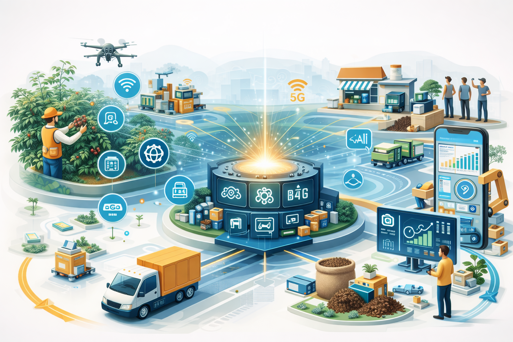
PRISMA applies circular and bioeconomy principles together with digital transformation technologies such as 5G, IoT, AI, blockchain, and digital twins to create a “digicircular” model based on a Physical Internet platform. This model connects stakeholders to efficiently recover spent coffee grounds, minimize waste, and optimize resource use.

PRISMA aims to:
• Support the transition towards a data-driven circular economy
• Integrate sustainability assessment with digital transformation
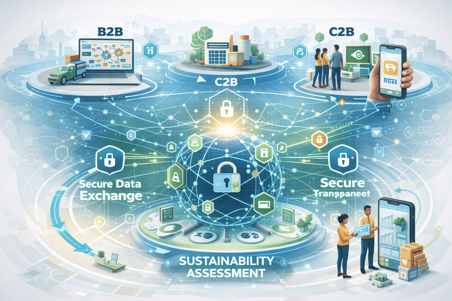
• Enable secure and transparent data exchange among stakeholders
• Define clear data ownership and governance mechanisms
• Facilitate collaboration across B2B, C2B, and B2C platforms
• Increase trust in digital circular value networks

PRISMA combines sustainability and digital innovation through:
Physical Internet: Open and efficient logistics networks
IoT & Data : Real-time monitoring and tracking
AI & Analytics : Smart matching and optimization
Digital Twin : Virtual simulation of supply chains
Blockchain : Secure and transparent data sharing
Together, these technologies enable a data-driven circular economy.

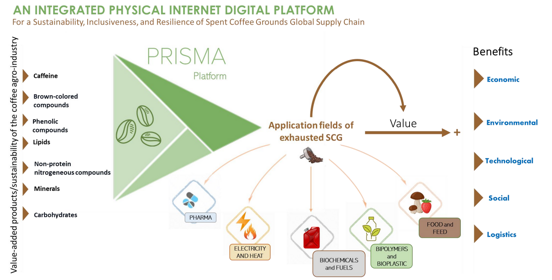
The PRISMA project enables the valorization of exhausted spent coffee grounds through an integrated Physical Internet digital platform. It transforms coffee waste into high-value resources for pharmaceutical, energy, biochemical, biopolymer, and food and feed applications. By connecting sustainable processing with digital coordination, PRISMA creates new circular value chains and maximizes economic, environmental, and technological benefits.